Showing posts with label Miami in the 1930s. Show all posts

Tuesday, March 31, 2026

Before Wolfie's, popular Al's Sandwich Shop of Miami Beach and his overstuffed creations


Sandwich prep (not Al's or
Wolfie's)
Florida State Archives

By Jane Feehan

Wolfie’s Restaurants in Miami Beach and Fort Lauderdale built their reputation on overstuffed corned beef or pastrami sandwiches and a huge menu of delicious deli fare. Fans returned repeatedly for that great food, which included bowls of coleslaw and pickles and tiny pastries at each table, ready for munching on before ordering.

Overstuffed sandwiches and bowls of deli delights were around before Wilfred “Wolfie” bought Al’s Sandwich Shop around 1940. Some say Al Nemets conceived the big-sandwich and bowls-of-slaw-and-pickles idea.

About Al Nemets

Russian-born Alvin J. Nemets (1907-1989) left his country during the 1917 Revolution. He joined his parents, residents of Philadelphia, in 1921, after traveling in Europe. Nemets worked as a glass cutter with his father for a time but moved to Miami Beach during the early 1930s where some say he learned about the restaurant biz at Bernstein’s.

In 1936 he opened his own place, a deli and restaurant, on Fifth and Washington in Miami Beach. A few years later, newspaper ads indicated the shop’s address was on 23rd Street. According to Miami Beach historian Seth Bramson, Nemets—and his shop—were well known in the 1930s. (Bramson's book referenced below- it's an excellent source for Miami Beach photos).

His idea of overstuffed sandwiches, those deli bowls and the shop’s popularity appealed to Wolfie Cohen when he purchased the restaurant.

Miami Beach 1937,
Florida State Archives
What Wolfie Cohen did in his early days with Al’s was to advertise when the shop was open (all night at one point), Thanksgiving dinner for $2.95 and more.

 Cohen grew the shop's reputation among visitors and residents and got  coverage by food writers. How about a corned beef cheeseburger for “taste thrills?" wrote foodie Helen Burns of the Miami Daily News (May 6, 1950). It was not long before the reputation for tasty food, not ads, brought customers through the door. Cohen’s sandwiches drew celebrities from across the street at the Roney Plaza Hotel, elevating the restaurant's profile. Wolfie Cohen, who died in 1986, opened Wolfie’s, Pumpernik’s and the Rascal House in his remarkable career.

Nemets’ career was also stellar. After selling his place to Cohen, Nemets joined the U.S. Navy in 1940; he served as warrant officer first class. After the war he remained in the restaurant business. He opened the Rendezvous Restaurant on Miami Beach at Collins and 20th. He also managed Pumpernik’s Restaurant, Wolfie’s, and the Bonfire. According to his obituary, Nemets opened the Newport and Roney Pub restaurants in the early 1970s and was active there until the early 1980s.

Alvin J. Nemets died in 1989 at 82 years of age. His legacy, which includes those overstuffed sandwiches and deli bowls,is one of many stories of achieving the American Dream with an idea and hard work.

For a postcard of Al’s Sandwich Shop (and other old restaurants), visit: https://wolfsonianfiulibrary.wordpress.com/2024/07/30/menus-memorabilia-for-miami-beach-eateries/

Copyright © 2026. All rights reserved. Jane Feehan

For more on the Wolfie's story, use search box.

For an excellent collection of Miami Beach photos, see Bramson’s book below.

Bramson, Seth H. Miami Beach. Arcadia Publishing, 2005. Charleston, SC, Chicago, IL, Portsmouth, NH, San Francisco, CA

The Miami News, Nov. 12, 1940

The Miami Herald, Sept. 13, 1946

The Miami Herald, Nov. 30, 1946

The Daily News, Oct. 8, 1986

The Miami Herald, Oct. 24, 1989


Tags: Miami Beach restaurants, Al's Sandwich Shop, Wolfie's, 

Friday, June 14, 2019

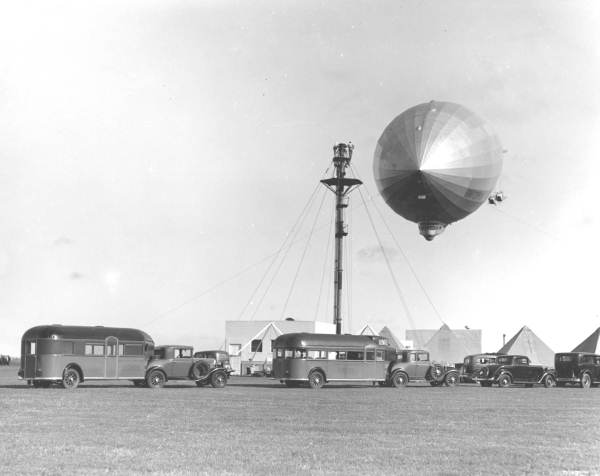
Celebrated Graf Zeppelin lands in Miami with big plans

Graf Zeppelin arriving at Opa-Locka naval base
Florida State Archives/Florida Memory


By Jane Feehan

The German-built airship, the Graf Zeppelin, achieved world-wide celebrity status in 1928. It made the first commercial-passenger dirigible flight across the Atlantic, landing Oct. 15 that year in Lakehurst, New Jersey. It was also the largest one built up to that time—800 feet— and its commander, Dr. Hugo Eckener (1868-1954) was considered a leading expert in dirigible flight. In 1929 he successfully flew the airship around the world, chalking up another first.

Enthusiasm for commercial dirigible flight surged across the U.S. after the Graf Zeppelin’s trans-oceanic trip in 1928. The U.S. military was already using rigid-construction (frame) airships to support search and coastal operations but visions of passengers and goods traveling across the Atlantic fueled dreams of expanded commerce. According to news accounts, Miami officials, excited by the prospects of such travel, set aside hundreds of acres and spent $40,000 for a dirigible docking port at the Opa-Locka Naval Reserve Base, dedicating it Jan. 13, 1930. Some news sources claimed it was the only such port in the world municipally owned.

Miami officials were eager to see the Graf Zeppelin up close after the commander accepted their invitation to visit Miami. Dr. Eckener scheduled a trip from Friedrichshafen, Germany to Miami in 1933 before heading to Goodyear headquarters in Akron. Floridians were also caught up in airship fever. Seaboard Air Line advertised discounted two-day, round-trip rail service from Bartow, Winter Haven, West Palm Beach, Fort Lauderdale and Hollywood to see the famous zeppelin in Opa-Locka.

On Oct. 23, 1933, the Graf Zeppelin, with its 98-foot gondola, coasted 1,000 feet over Miami. It was escorted by a plane to the Opa-Locka naval air station, where beefed-up security was deployed to guard the dirigible against possible violence. Protests were predicted (but did not occur) against the new German regime headed by Hitler who grabbed power in January 1933.

Commander Hugo Eckener was accompanied by a representative from the German Air Ministry, an editor from a French aeronautical magazine, Hearst reporter, Lady Grace-Drummond-Hay and a few private citizen passengers. Miami Mayor E.G. Sewell, Miami commissioners, Opa-Locka officials, and other notables, soon whisked the visitors to the McAllister Hotel and then to a luncheon at the Old Heidelberg restaurant.

Eckener told hosts about his plans to expand Graf Zeppelin’s trans-oceanic service: a route from Seville, Spain to Rio de Janeiro with a stop in Miami during the winter, and a summer route to Lakehurst or Washington, D.C. The commander thought the service could begin in two years. Dr. Eckener also hoped for service from the U.S. to Egypt via Europe.

The Graf Zeppelin, its crew and passengers departed Opa-Locka for Akron about 16 hours later. It proved to be a short visit with a long list of possibilities that did not come to fruition. Later, Eckener thought traveling across the Atlantic on a more southern route would be easier. The airship continued to operate but under clouds of pending war in Europe. Its nine-year successful run came to an end the day after the Hindenburg disaster May 6, 1937 in New Jersey when 36 died in its fire. In 1940, parts from the grounded Graf Zeppelin were taken for use in German war-bound winged aircraft.

Dr. Eckener, no fan of the Nazis (nor they of him) criticized the regime for cutting costs in operating dirigibles; he endorsed the use of helium rather than the explosive hydrogen in landings. Helium, a by-product of mined mineral gas, was controlled by the U.S. starting in 1925; regulation drove up its costs. The German government opted for use of the cheaper hydrogen. Some experts later surmised a spark ignited hydrogen, causing the devasting Hindenburg fire that occurred just 200 feet above ground. The Hindenburg disaster spelled doom for dirigible flight. Airplane travel was about to take over, further diminishing prospects for such ships as the Graf Zeppelin.

The L-27 Graf Zeppelin, the one that stopped in Miami, proved to be the most successful of zeppelins. It made 590 flights, racked up more than a million miles and carried more than 34,000 passengers without a single injury. It also conducted one scientific mission to the North Pole.

Between 1912-1930, there were 13 airship flights (NOT the Graf Zeppelin) involving 275 fatalities. There were more fatal accidents both before and after that time span; a comprehensive list is difficult to find. In spite of safety concerns, the glamour of dirigible flying was never matched by the more efficient common carrier airplanes, the flying buses that replaced them.

Copyright © 2021, 2022 All rights reserved. Jane Feehan.

Sources:

Miami News, Oct. 11, 1928
Miami News, Oct. 16, 1928
Miami News, Jan. 13, 1930
Miami News, April 4, 1933
Miami News, Sept. 28, 1933
Miami News, Oct. 21, 1933
Miami News, Oct 23, 1933
Airships.net


Tags: Miami history, Opa-Locka, dirigibles, Graf Zeppelin, Jane Feehan, dirigibles, air travel, aviation history